



Tag Archives: Muscle Activation
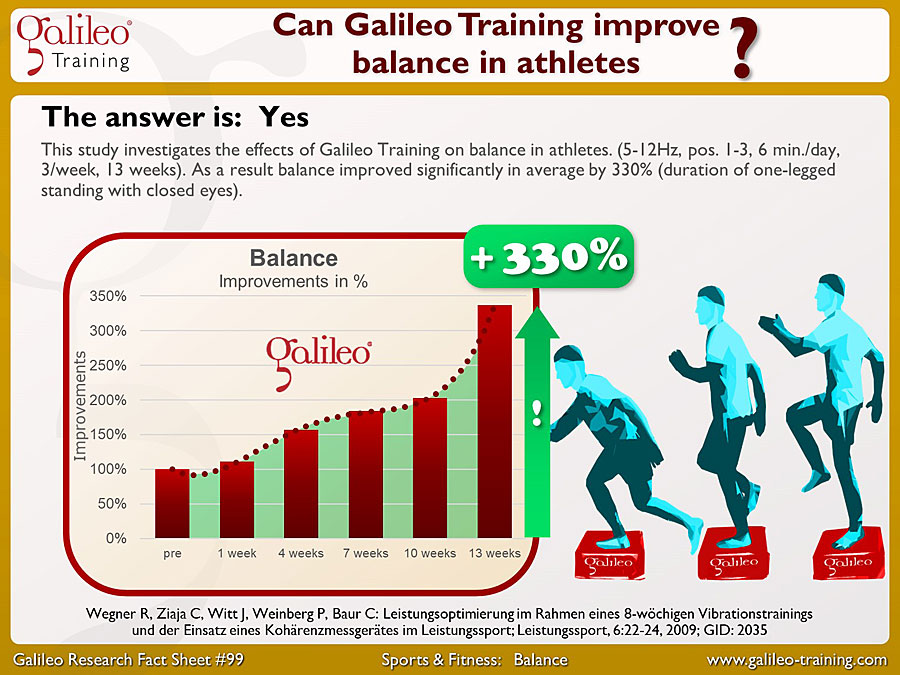
Galileo Research Facts No. 99: Can Galileo Training improve balance in athletes?
This study investigates the effects of Galileo Training on balance in athletes. (5-12Hz, pos. 1-3, 6 min./day, 3/week, 13 weeks). As a result balance improved significantly in average by 330% (duration of one-legged standing with closed eyes)...
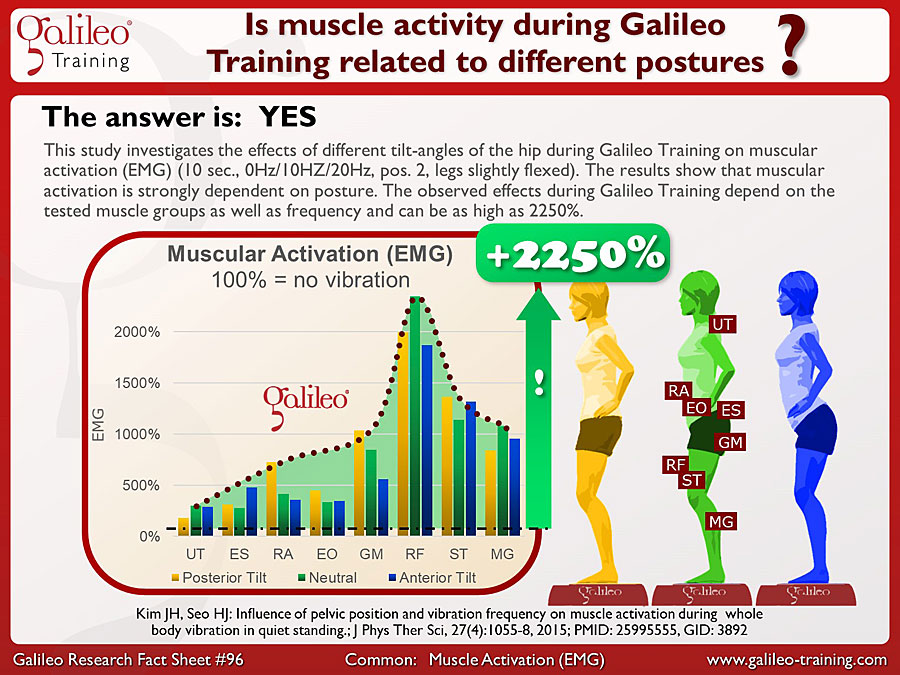
Galileo Research Facts No. 96: Is muscle activity during Galileo Training related to different postures?
This study investigates the effects of different tilt-angles of the hip during Galileo Training on muscular activation (EMG) (10 sec., 0Hz/10HZ/20Hz, pos. 2, legs slightly flexed). The results show that muscular activation is strongly dependent on posture. The observed effects during Galileo Training depend on the tested muscle groups as well as frequency and can be as high as 2250%...
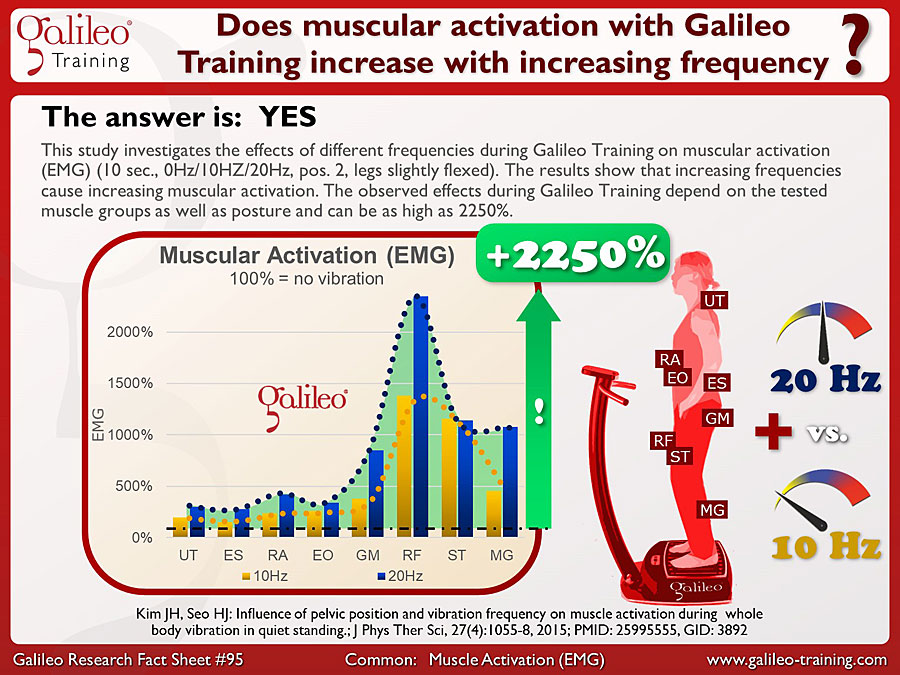
Galileo Research Facts No. 95: Does muscular activation with Galileo Training increase with increasing frequency?
This study investigates the effects of different frequencies during Galileo Training on muscular activation (EMG) (10 sec., 0Hz/10HZ/20Hz, pos. 2, legs slightly flexed). The results show that increasing frequencies cause increasing muscular activation. The observed effects during Galileo Training depend on the tested muscle groups as well as posture and can be as high as 2250%...
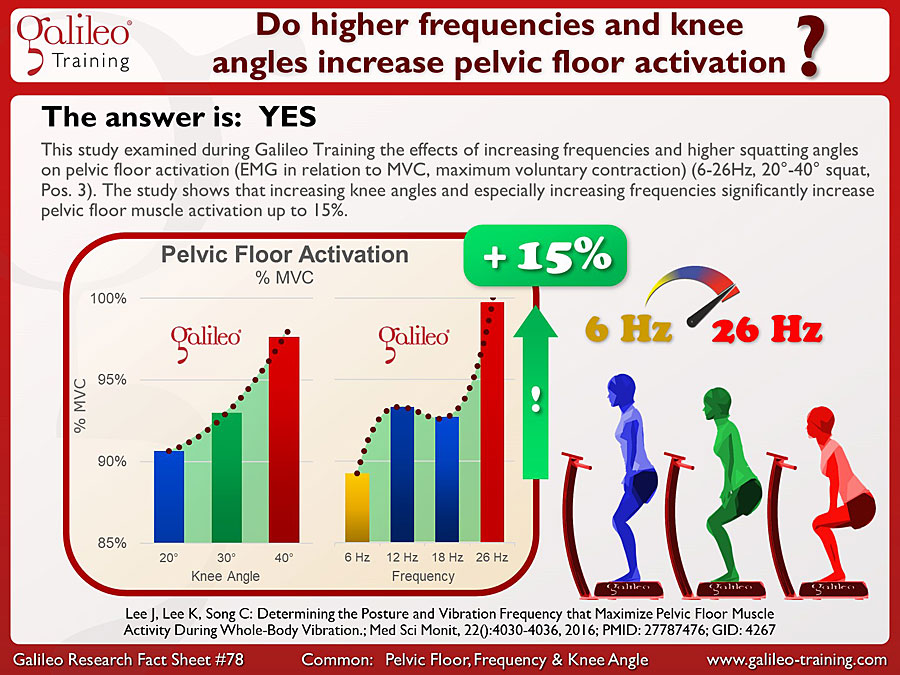
Galileo Research Facts No. 78: Do higher frequencies and knee angles increase pelvic floor activation?
This study examined during Galileo Training the effects of increasing frequencies and higher squatting angles on pelvic floor activation (EMG in relation to MVC, maximum voluntary contraction) (6-26Hz, 20°-40° squat, Pos. 3). The study shows that increasing knee angles and especially increasing frequencies significantly increase pelvic floor muscle activation up to 15%...
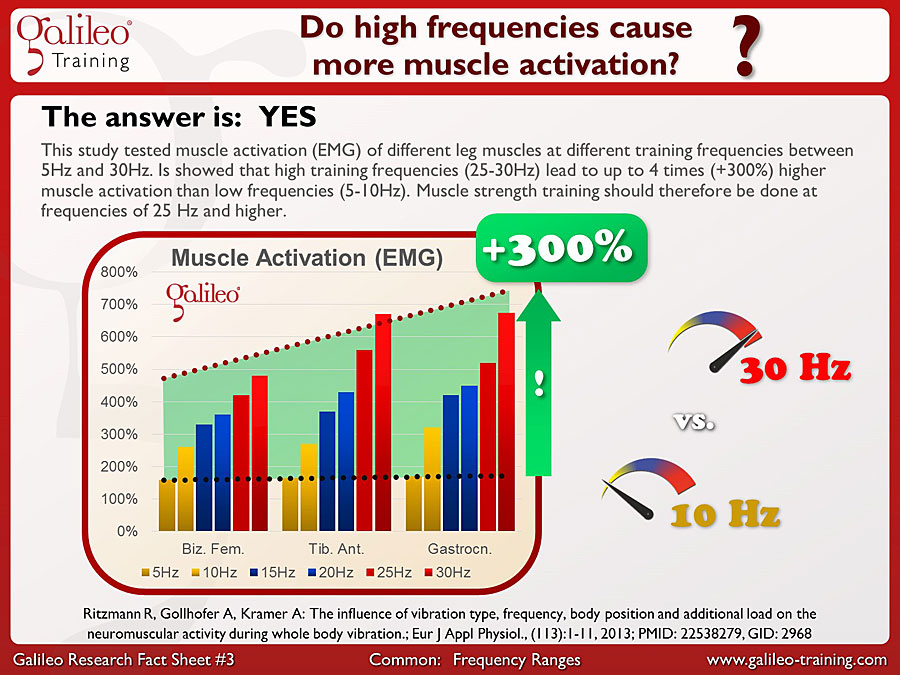
Galileo Reserach Facts No. 3: Do high frequencies cause more muscle activation?
This study tested muscle activation (EMG) of different leg muscles at different training frequencies between 5Hz and 30Hz. Is showed that high training frequencies (25-30Hz) lead to up to 4 times (+300%) higher muscle activation than low frequencies (5-10Hz). Muscle strength training should therefore be done at frequencies of 25 Hz and higher...