



Tag Archives: DLR
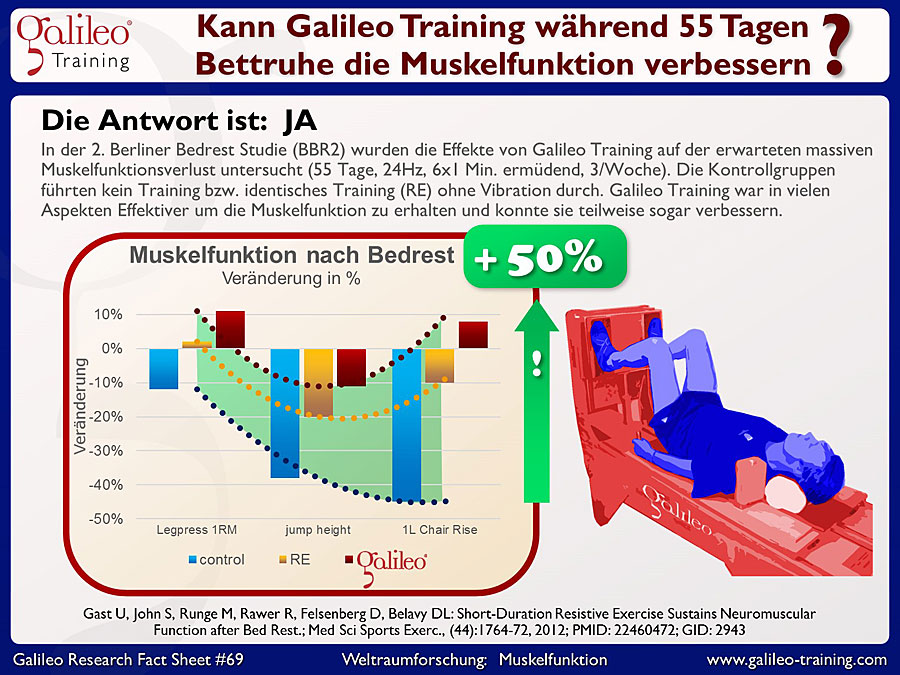
Galileo Research Facts No. 69: Can Galileo Training during 55 days bed rest improve muscle function?
In the 2nd Berlin Bedrest Study (BBR2) the effects of Galileo Training against the expected bone loss was tested (55 days, 24Hz, 6x1 min. exhaustive, 3/week). The control groups receive no training or identical training with-out vibration (RE). Galileo showed in almost all. In many aspects of muscle function Galileo Training was most effective to compensate effects of bed rest in some aspects it could even improve function...
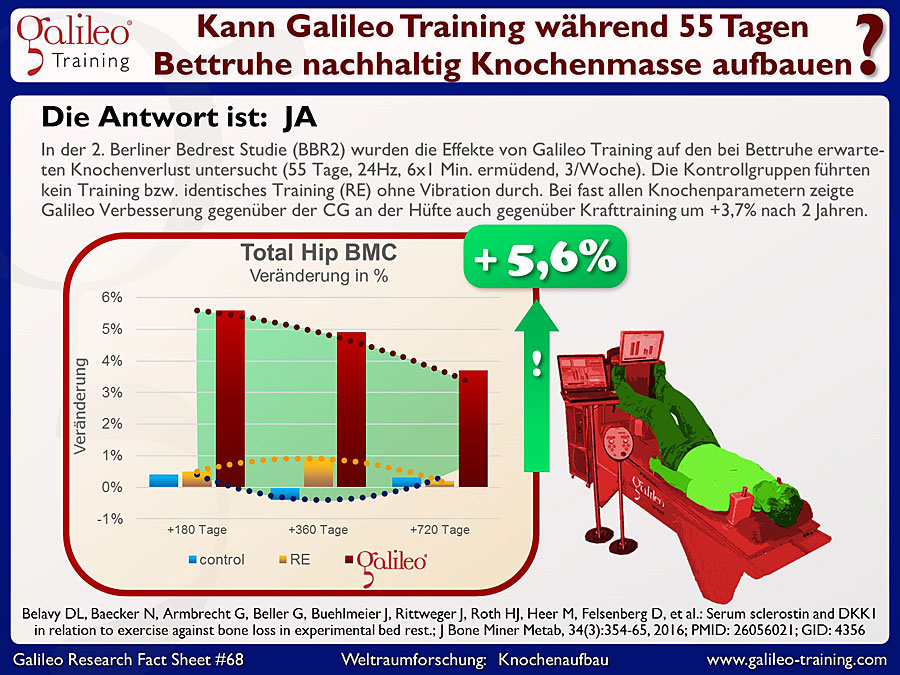
Galileo Research Facts No. 68: Can Galileo Training during 55 days bedrest improve long-term bone mass?
In the 2nd Berlin Bedrest Study (BBR2) the effects of Galileo Training against the expected bone loss was tested (55 days, 24Hz, 6x1 min. exhaustive, 3/week). The control groups receive no training or identical training with-out vibration (RE). Galileo showed in almost all bone parameters improvements vs. control and e.g. in total hip BMC even vs. RE with improvements of up to +5.6% after half a year and still +3,7% after 2 years after bedrest...
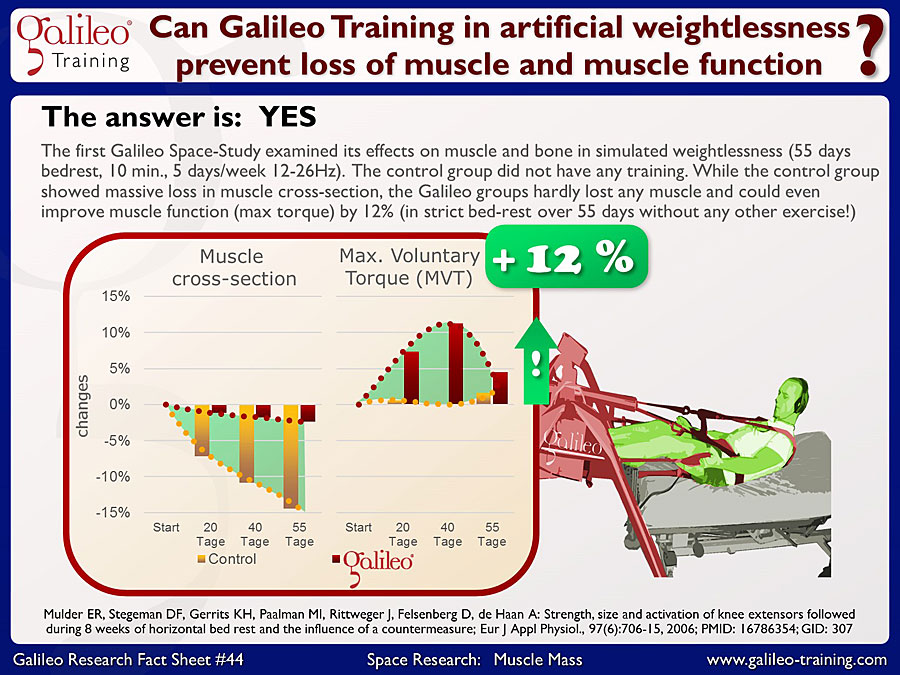
Galileo Research Facts No. 44: Can Galileo Training in artificial weightlessness prevent loss of muscle and muscle function?
The first Galileo Space-Study examined its effects on muscle and bone in simulated weightlessness (55 days bedrest, 10 min., 5 days/week 12-26Hz). The control group did not have any training. While the control group showed massive loss in muscle cross-section, the Galileo groups hardly lost any muscle and could even improve muscle function (max torque) by 12% (in strict bed-rest over 55 days without any other exercise!)...